Natural Fertility Acupuncture Melbourne
Preconception Care, Cycle Regulation & Egg Quality Support
Most couples start with a simple goal – to conceive naturally. But for many, the path is more complex than expected.
Cycles that don’t cooperate. Ovulation that’s hard to detect. Hormones that are out of balance. Or simply months of trying without result.
At Almond Wellness Centre, our natural fertility acupuncture programs are designed specifically for individuals and couples pursuing natural conception – or those who want to build the strongest possible reproductive foundation before considering assisted reproduction.
Our approach draws on over 20 years of specialised fertility practice. Programs are led by Dr. Richard Zeng – a 4th generation TCM doctor with more than 30 years of full-time clinical experience in reproductive health.
Our core principle: prepare the soil before planting the seed.
This page focuses on natural conception and preconception care.
For IVF-specific support, visit our → IVF Acupuncture Melbourne
For an overview of all fertility programs, visit our → Fertility Acupuncture Melbourne
📍 Clinics in Coburg (North) and Ringwood (East) — Open 7 Days
The 3-4 Month Preconception Window – Why It Matters
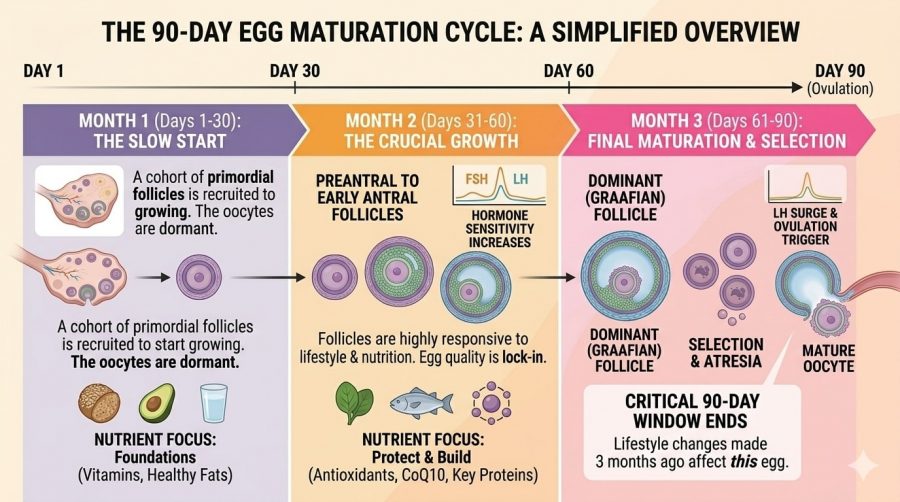
The most important clinical concept in natural fertility care is the 90-day egg and sperm development cycle.
Eggs take approximately 90–120 days to mature from their earliest stage to ovulation. The quality of that egg – its chromosomal integrity, energy supply, and developmental potential – is shaped by everything that happens during those 3–4 months. Sperm development follows a similar timeline of approximately 70–90 days.
This means that acupuncture, herbal medicine, nutritional changes, and lifestyle improvements made today may influence the quality of eggs and sperm available for conception in 3 months’ time.
This is why we recommend a minimum 3-4 month preconception program – and why starting earlier typically produces better outcomes than waiting until an IVF decision is made.
The preparation phase is especially recommended if you:
- Are 35 or older
- Have low AMH or diminished ovarian reserve
- Have high FSH levels
- Have irregular, absent, or very painful cycles
- Have PCOS or endometriosis
- Have experienced one or more miscarriages
- Have been trying to conceive for 6–12 months without success
- Have received an unexplained infertility diagnosis
- Want to optimise health proactively before trying to conceive
Acupuncture Timed to Your Cycle – The 4-Phase Treatment Model
One of the most clinically distinctive features of TCM-based fertility care is cycle-phase acupuncture.
Rather than applying the same treatment every week, our practitioners design protocols specific to each phase of your menstrual cycle. The reproductive system’s needs – and the therapeutic leverage available – are different at each stage.
This 4-phase model is the foundation of every natural conception program we run.
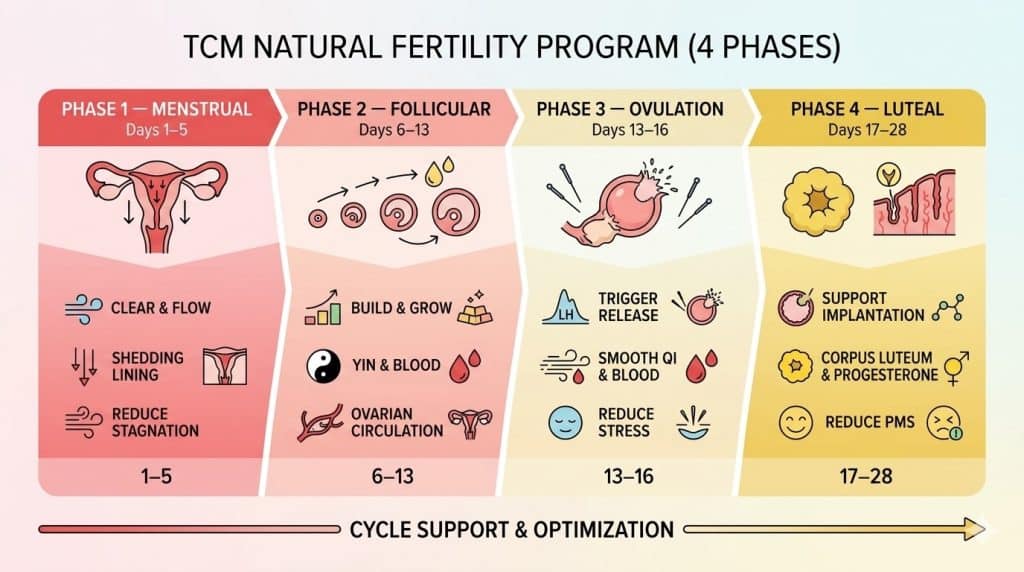
Phase 1 - Menstrual Phase (Days 1–5)
Clinical focus:
- Supporting healthy menstrual flow
- Clearing stagnation
- Laying the groundwork for healthy follicular development
Treatment in this phase supports complete shedding of the uterine lining. It addresses painful periods, clotting, and incomplete flow – all of which may affect the endometrial environment for the next cycle.
Phase 2 - Follicular Phase (Days 6–13)
- Supporting follicle development;
- Building yin and blood;
- Improving ovarian blood flow.
As follicles develop and oestrogen rises, treatment supports the hormonal environment that allows a dominant follicle to mature. The focus is on circulation to the ovaries and the quality of the developing egg.
Phase 3 - Ovulation (Days 13–16)
- Facilitating ovulation;
- Ensuring smooth qi and blood flow;
- Reducing stress that can suppress the LH surge.
Acupuncture around ovulation is timed to support the LH surge and follicular rupture. It also addresses stress and liver qi stagnation – patterns that can delay or suppress ovulation in some patients.
Phase 4 - Luteal Phase (Days 17–28)
Clinical focus:
- Supporting corpus luteum function;
- Maintaining progesterone levels;
- Preparing the endometrium for implantation;
- Reducing premenstrual symptoms.
The luteal phase is the window of implantation. Treatment focuses on yang support, stress regulation, and progesterone-supportive protocols – particularly important for patients with a short luteal phase or luteal phase defect.
Basal Body Temperature (BBT) Monitoring – Reading Your Cycle
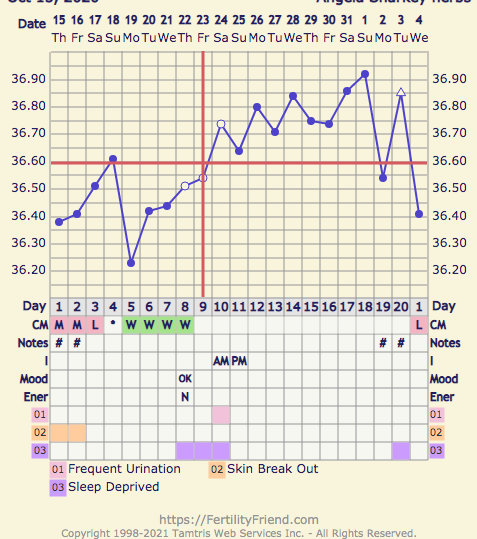
Basal body temperature (BBT) charting is one of the most informative tools in natural fertility care. It is a central part of how our practitioners assess and monitor your cycle throughout your program.
A BBT chart is a daily record of your resting body temperature – taken first thing each morning, before getting out of bed. Charted consistently over several cycles, it reveals:
- Whether you are ovulating – a temperature rise of approximately 0.2°C signals progesterone release after ovulation
- When ovulation occurred – helping time the fertile window in future cycles
- The quality of the luteal phase – a sustained rise for 12–14 days post-ovulation indicates adequate progesterone; a short or unstable rise suggests luteal phase insufficiency
- Whether conception may have occurred – a sustained elevated temperature beyond the expected period date is a strong early indicator
- TCM pattern insights – the shape, rhythm, and temperature range of your chart helps your practitioner refine their diagnosis
We provide a guided BBT charting protocol and review your charts at every appointment. If you’re new to BBT monitoring, we’ll walk you through it at your first consultation.
Supporting Egg Quality – What We Focus On
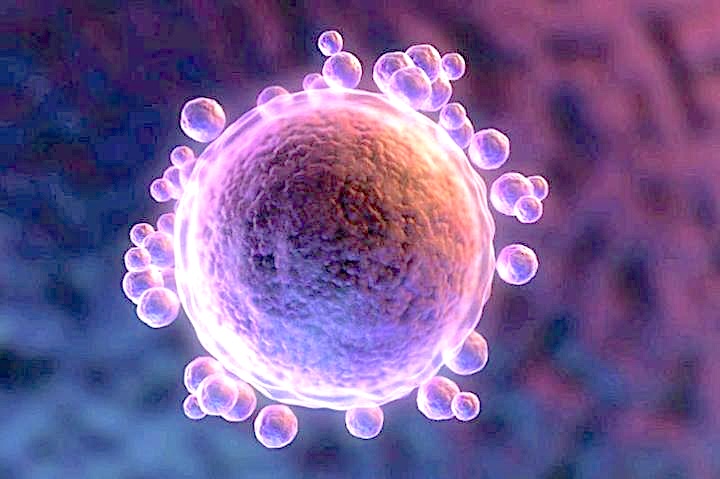
Egg quality is the most discussed – and most misunderstood – aspect of natural fertility for women over 35 or those with diminished ovarian reserve. It cannot be directly measured by standard blood tests. But it profoundly influences both the chance of conception and the risk of miscarriage.
The primary drivers of egg quality include:
- Mitochondrial function – eggs have the highest concentration of mitochondria of any cell in the body; their energy supply directly affects developmental potential
- Ovarian blood flow and oxygenation – poor circulation reduces the oxygen and nutrients available to developing follicles
- Oxidative stress – free radical damage to oocyte DNA is a significant driver of age-related quality decline
- Hormonal balance – particularly FSH, LH, AMH, and the oestrogen environment during follicular development
- Chronic physiological stress – elevated cortisol disrupts the HPO axis and impairs follicular development
Acupuncture may support egg quality by:
- Improving blood flow to the ovaries
- Reducing oxidative stress through vascular and neuroendocrine mechanisms
- Reducing stress hormones that suppress the reproductive system
- Supporting the hormonal environment during follicular development
Chinese herbal medicine may provide additional support for:
- Ovarian function and follicular development
- Formulas tailored to your TCM constitutional pattern and any associated conditions such as low AMH or high FSH
Targeted supplementation is also integrated into egg quality protocols, guided by your individual assessment – not a generic template. This may include CoQ10, Vitamin D, omega-3 fatty acids, zinc, and antioxidants.
Regulating the Menstrual Cycle for Natural Conception
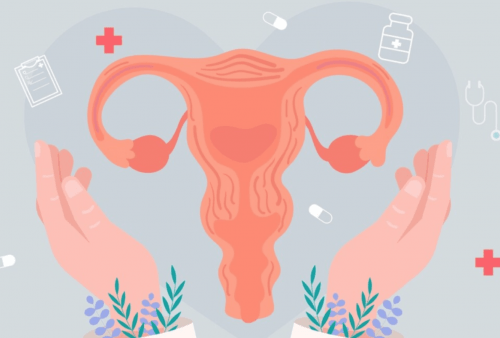
A regular, healthy menstrual cycle is the foundation of natural fertility. When cycles are irregular, absent, very short, very long, or accompanied by significant symptoms – ovulation timing becomes unpredictable and the conditions for conception are suboptimal.
Cycle irregularities we commonly address:
- Irregular cycle length (shorter than 25 days or longer than 40 days) – assessing the hormonal pattern driving the irregularity and regulating through cycle-phase acupuncture and herbal medicine.
- Short luteal phase / luteal phase defect – a luteal phase shorter than 10 days may not provide sufficient progesterone support for implantation; treatment targets corpus luteum support in the second half of the cycle
- Absent periods (amenorrhea) – whether related to PCOS, hypothalamic suppression, post-pill transition, or stress; we always recommend concurrent medical investigation for amenorrhea of 3+ months
- Painful periods (dysmenorrhoea) – period pain often reflects stagnation patterns that also affect uterine blood flow and receptivity; addressing it is frequently an important secondary goal within a fertility program
- Ovulation irregularity – difficulty detecting ovulation, mid-cycle spotting, or absent fertile mucus; assessed through BBT charts, OPK patterns, and TCM diagnosis.
Natural Male Fertility Support
Natural conception requires two. Male factor fertility contributes to approximately 40–50% of all fertility challenges, yet male fertility support is often the last part of the conversation.
For natural conception programs specifically, we recommend that both partners begin treatment simultaneously. Sperm quality 3 months from now is shaped by what is happening today.
Male fertility support in natural programs may include:
- Weekly acupuncture targeting sperm production and reproductive organ blood flow
- Chinese herbal medicine – formulas supporting sperm count, motility, and morphology
- Targeted supplementation (zinc, CoQ10, vitamin C, vitamin E, folate, selenium)
- Dietary guidance and lifestyle factors (heat avoidance, oxidative stress reduction)
We commonly support male partners with:
- Low sperm count (oligospermia)
- Poor motility (asthenospermia)
- Abnormal morphology (teratospermia)
- Elevated sperm DNA fragmentation
→ Male Fertility Acupuncture Melbourne
Chinese Herbal Medicine – A Core Component
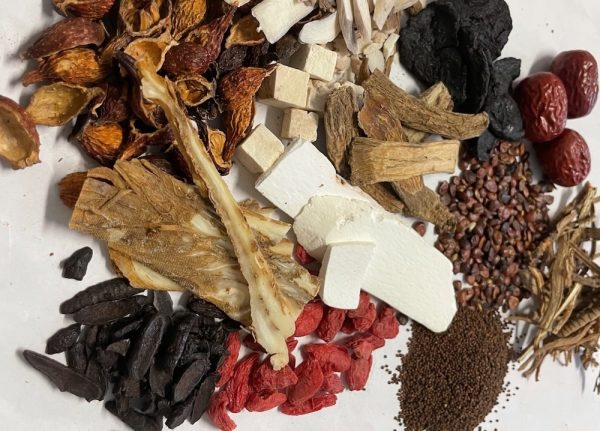
Chinese herbal medicine (CHM) plays a central role in natural fertility programs. It often provides ongoing support between acupuncture sessions that acupuncture alone cannot sustain.
Acupuncture provides a strong therapeutic stimulus in the clinic. Herbal formulas work continuously – taken daily, they maintain momentum across the full menstrual cycle.
Research context: A systematic review published in Complementary Therapies in Medicine suggested Chinese herbal medicine may improve pregnancy rates in women with infertility, with potential effects on ovulation, endometrial quality, and hormonal balance. We cite this as context, not as a guarantee – individual outcomes vary, and formulas are only prescribed where clinically appropriate.
How formulas are prescribed: Every formula at Almond Wellness Centre is prescribed individually – based on your TCM constitutional pattern, current cycle phase, and specific clinical presentation. Formulas are adjusted as your condition evolves, often monthly.
Forms of Chinese herbal medicine:
| Form | Description | Best for |
|---|---|---|
| Raw herbs (decoction) | Cooked as a tea; most potent traditional form | Complex or acute presentations |
| Granulated herbs | Dissolved in hot water; strong effect, easier to prepare | Most fertility patients |
| Patent herbal pills | Convenient and mild | Maintenance or constitutional support |
When are herbs paused?
Chinese herbal medicine is typically paused once ovarian stimulation begins for IVF, or in early pregnancy, unless your practitioner advises otherwise in consultation with your medical team. For natural conception programs, herbal treatment continues through the full cycle with appropriate phase-based adjustments.
Want to know if fertility acupuncture can help you? Book Online or Message us here
Natural Fertility & Unexplained Infertility
An unexplained infertility diagnosis – where standard investigations find no identifiable structural or hormonal cause – is more common than most patients expect. It accounts for a significant proportion of couples who have been trying for 12 or more months without result.
From a TCM perspective, this presentation is rarely truly “unexplained” – it is often reflects of functional imbalances in circulation, cycle rhythm, constitutional vitality, or stress physiology. These sit below the threshold of conventional diagnostic detection – but they can still affect the conditions needed for conception.
A structured natural fertility program – with careful cycle mapping, BBT analysis, constitutional assessment, and integrated herbal and nutritional support – is often particularly valuable for this patient group.
Conditions Commonly Addressed in Natural Fertility Programs
| Condition | Natural Fertility Focus | Page |
|---|---|---|
| PCOS | Ovulation regulation, androgen reduction, metabolic balance | PCOS Acupuncture Melbourne |
| Endometriosis | Uterine environment, pain management, inflammatory support | Endometriosis Acupuncture Melbourne |
| Low AMH | Ovarian environment, egg quality optimisation | Low AMH Acupuncture Melbourne |
| High FSH | HPO axis regulation, ovarian function support | High FSH Acupuncture |
| POI | Supportive care coordinated with specialist management | Premature Ovarian Insufficiency |
| Short luteal phase | Progesterone support, corpus luteum function | Luteal Phase Defect |
| Absent periods | HPO axis regulation, ovulation restoration | Amenorrhea Acupuncture Melbourne |
| Unexplained infertility | Functional TCM assessment beyond standard diagnostics | Unexplained Infertility Acupuncture Melbourne |
When to Seek Natural Fertility Support – A Clinical Guide
By age - seek assessment if you
- Under 30: After 12 months of regular trying without conception
- 30–35: After 6 months without conception
- Over 35: After 3 months – earlier if cycles are irregular or there is a known condition
- Over 38: Proactively before trying, or immediately if already trying
By cycle pattern - seek assessment if you have:
- Cycles shorter than 21 days or longer than 35 days
- Not sure if you’re ovulating or not (via BBT, OPK)
- Fertile mucus not noticeable
- Ovulation pain or mid-cycle spotting
- A luteal phase shorter than 10 days
- Absent periods (3+ months)
- Severe PMS – mood, pain, bloating, headaches
- Spotting before or during your period
By clinical history - seek assessment if you have:
- Two or more consecutive miscarriages
- A diagnosis of PCOS, endometriosis, or another condition
- Low ovarian reserve (low AMH, elevated FSH, low antral follicle count)
- Premature ovarian insufficiency
- A partner with abnormal semen analysis results
- An unexplained infertility diagnosis
- Previous fertility treatment without pregnancy
Early intervention consistently produces better outcomes – both for natural conception timelines and for preconception health optimisation if IVF becomes the pathway.
Your Natural Fertility Team
Our practitioners hold AHPRA registration and advanced clinical training in TCM gynaecology, reproductive endocrinology fundamentals, preconception care, and fertility-focused herbal medicine.
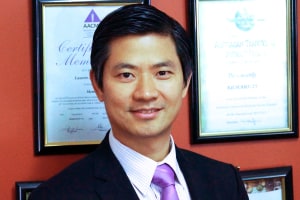
Dr. Richard Zeng
Senior Fertility Acupuncturist & Clinical Director.
4th generation TCM doctor, 30+ years full-time experience.
Available at Coburg (Wed & Sat) and Ringwood (Tue & Fri).
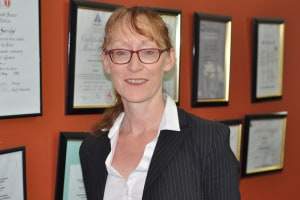
Dr. Tracey Byrne
Senior acupuncturist and herbalist at Coburg clinic.
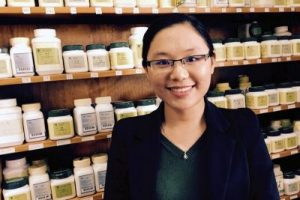
Dr. Ruby Hou
Acupuncturist with strong interest in women’s health and fertility.
Available at Coburg (Mon & Fri), Ringwood (Wed & Sat)
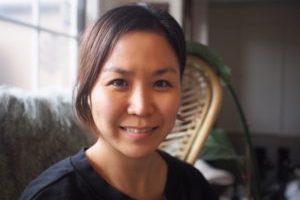
Dr. Mira An
Triple-qualified acupuncturist, herbalist and nutritionist with specialised gynaecology training from Kyung Hee University Hospital, Seoul.
Available at Ringwood (Mondays).
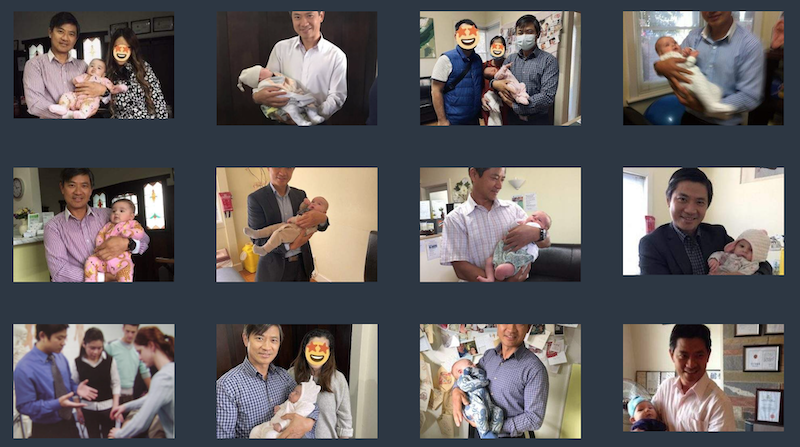
Over the past 20 years, we’ve helped countless couples conceive and bring their babies home. We’re here to make your journey as smooth and stress-free as possible.
Natural Fertility Acupuncture – Melbourne Clinic Locations
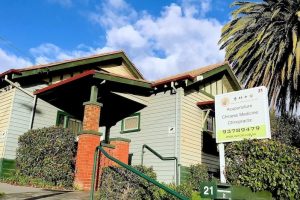
Coburg - Melbourne North
📍 21 Bell Street, Coburg VIC 3058
📞 03 9378 9479
Serving Brunswick, Preston, Northcote, Essendon, Pascoe Vale, Bundoora, and surrounding northern suburbs.
→ View Coburg Clinic
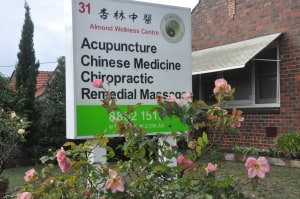
Ringwood - Melbourne East
📍 31 Wantirna Road, Ringwood VIC 3134
📞 03 8802 1519
Serving Mitcham, Croydon, Box Hill, Doncaster, Donvale, Vermont, Wantirna, and surrounding eastern suburbs.
→ View Ringwood Clinic
Frequently Asked Questions – Natural Fertility Acupuncture Melbourne
Does acupuncture help with natural conception?
Research suggests acupuncture may support natural conception by improving ovarian blood flow, regulating the HPO axis, reducing stress hormones, and supporting endometrial receptivity.
It is most effective as part of a structured, cycle-based program – not as occasional standalone sessions.
What is the 4-phase cycle treatment model?
It is a treatment approach that synchronises acupuncture, herbal medicine, and lifestyle support with the four phases of the menstrual cycle – menstrual, follicular, ovulation, and luteal. Each phase has different clinical priorities.
Structuring treatment around them is more effective than applying the same approach every week.
Should I try Chinese herbal medicine for natural fertility?
Chinese herbal medicine is a core component of our natural fertility programs. It provides continuous daily support between acupuncture sessions and can be tailored precisely to your TCM pattern and current cycle phase.
It is recommended for most patients unless there is a specific reason to avoid it.
Does acupuncture help with PCOS and natural conception?
Yes. PCOS is one of the most common presentations we treat. Acupuncture and herbal medicine may help regulate ovulation, reduce elevated androgens, and address the metabolic factors that disrupt fertility in PCOS.
Programs typically run for several months and work best when combined with nutritional and lifestyle guidance.
Can acupuncture help with low AMH for natural conception?
Acupuncture cannot reverse the underlying cause of diminished ovarian reserve. However, structured programs may help optimise the ovarian environment – supporting circulation, reducing oxidative stress, and improving hormonal regulation – in ways that may benefit egg quality.
These presentations respond best to sustained programs of 3 or more months.
Can acupuncture help with high FSH levels?
Yes. Elevated FSH often reflects diminished ovarian reserve or disrupted HPO axis signalling. Acupuncture and herbal medicine may help address the hormonal patterns associated with high FSH, though outcomes vary and sustained programs are recommended.
Does my partner need treatment too?
Yes – for natural conception, we strongly recommend both partners begin treatment simultaneously.
Male factor fertility contributes to 40-50% of all fertility challenges. Sperm quality 3 months from now is shaped by what is happening today.
Is diet important when preparing for natural conception?
Yes. A nutrient-dense, anti-inflammatory diet directly supports hormone production, egg development, sperm health, and uterine lining quality.
Our practitioners provide practical dietary guidance tailored to your individual clinical picture as part of every program.
Can acupuncture help if my cycles are very irregular or absent?
Yes. Cycle irregularity and absent periods are among the most common presentations we treat in natural fertility programs.
Treatment is tailored to the specific pattern driving the disruption – whether PCOS, post-pill, hypothalamic suppression, or stress-related. Concurrent medical investigation is always recommended for amenorrhea of 3+ months.
Can I continue acupuncture once pregnant?
Yes. Many natural fertility patients continue into our pregnancy acupuncture program after conception. Pregnancy acupuncture may help with nausea, back and pelvic pain, fatigue, anxiety, and birth preparation.
What fertility supplements are commonly recommended with natural fertility acupuncture?
Supplement protocols are tailored to each patient’s blood work and TCM diagnosis. Common recommendations include CoQ10, Vitamin D, omega-3 fatty acids, zinc, folate, and antioxidants.
For male partners, zinc, vitamin C, vitamin E, selenium, and CoQ10 are frequently recommended.

Ready to begin your natural fertility journey?
Whether you’re just starting out, have been trying for some time, or are navigating a specific diagnosis – a structured preconception program gives you the strongest possible foundation for natural conception.
Call Us Todayor
Book Your Natural Fertility Consultation OnlineAHPRA-registered. TGA-compliant herbal prescribing. Evidence-informed care since 2003.
Alternatively, Message us by filling out the Contact Form.